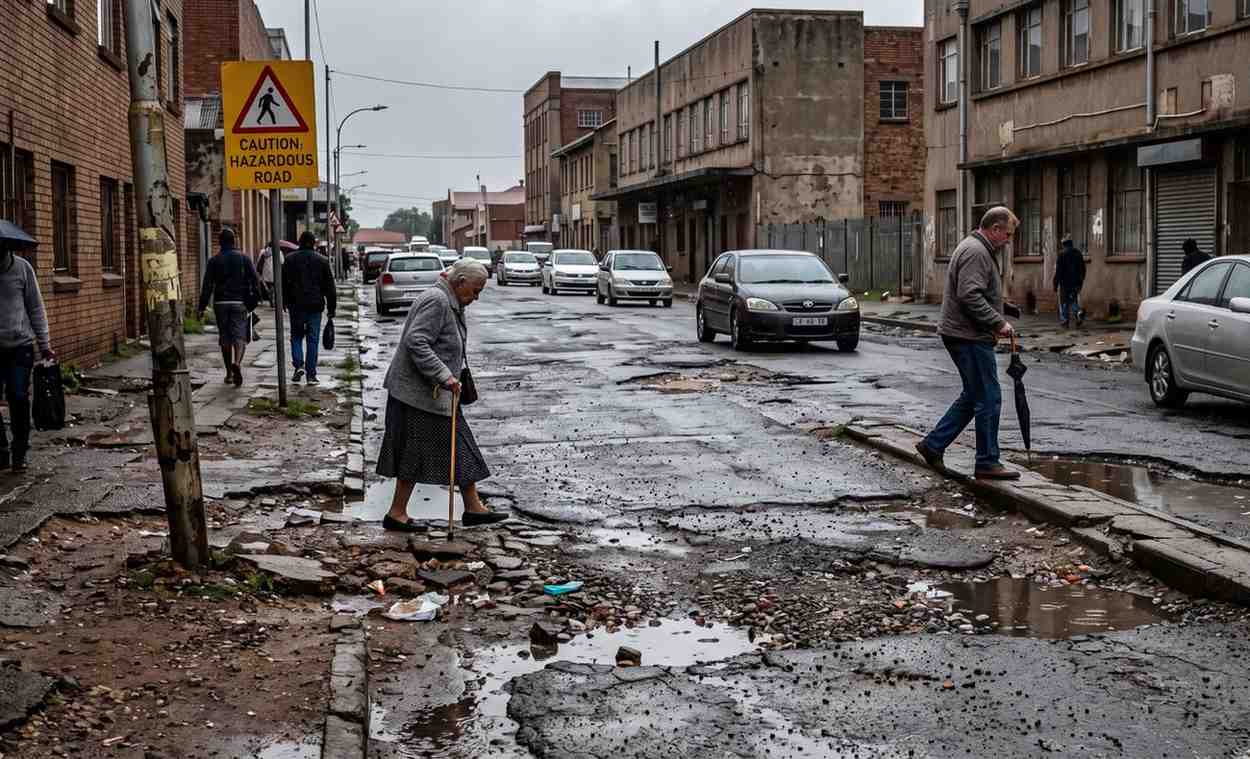
CIVIC DESK — Neglected road maintenance, unpaved walkways, and proliferating potholes are pushing pedestrians into harm’s way across urban centers, transforming routine daily commutes into dangerous navigation tasks.
Data from urban safety groups highlights a troubling trend: while municipal infrastructure efforts remain heavily focused on expanding vehicular corridors and easing traffic flow, pedestrian safety has hit a critical breaking point. Pedestrians now account for nearly 20% of all road fatalities nationally, with tens of thousands of deaths recorded annually—a sharp increase driven by poor urban road design and broken footpaths.
               Key Hazards Facing City Walkers
  ---------------------------------------------------------
  [!] Vanishing Sidewalks    Forces pedestrians into active traffic lanes.
  [!] Potholes & Cracks     Primary trigger for trip-and-fall injuries.
  [!] Waterlogging          Hides submerged drain covers and deep drops.
  [!] Poor Street Lighting  Reduces driver visibility around hazards.
The Cost of Neglect
Across several high-density corridors, footpaths are either badly eroded, occupied by encroachments, or terminate abruptly into open drainage ditches. During rainstorms, broken asphalt fills with standing water, concealing deep drops and loose rebar underfoot.
For senior citizens, school children, and individuals with disabilities, the terrain presents an ongoing physical risk.
“You cannot look up for a second while walking down these blocks,” said Ramesh Kumar, a local resident and daily commuter. “Between swerving motorists trying to dodge potholes and the shattered pavement beneath your feet, stepping onto the street feels like navigating an obstacle course.”
Growing Calls for Judicial and Civic Action
The crisis has increasingly caught the attention of legal bodies and public safety advocates. Recent judicial rulings have emphasized that safe, usable footpaths are a fundamental right, rejecting the notion that public roads belong exclusively to motor vehicles.
Public health and urban planning experts argue that quick-fix asphalt patches wash away during heavy downpours, offering only temporary relief while wasting civic funds. They are calling on city administrators to implement long-term structural solutions:
- Continuous Elevated Footpaths: Building barrier-protected walkways along all major arterial routes.
- Mandatory Speed-Calming Zones: Installing marked speed humps and zebra crossings near schools and busy markets.
- Immediate Drain & Pothole Audits: Clearing clogged drainage and resurfacing high-risk zones before weather events exacerbate conditions.
While municipal public works departments report that road repair assessments are underway along high-traffic corridors, residents maintain that visible, structural fixes are needed immediately to prevent further injuries.